86-13400725797
 info@homertrimmings.com




Poor-quality cat furniture drives returns and refunds. These issues erode customer trust and shrink your margins. Durable OEM cat furniture protects your brand reputation and repeat revenue. You must prioritize solid wood, modular design, and rigorous supplier evaluation from day one.
Key Takeaways
-
Choose solid wood and dense sisal for cat furniture. These materials resist scratching and last longer. They reduce customer complaints and returns.
-
Evaluate suppliers on certifications, testing, and communication. Do not focus only on price. Good suppliers protect your brand reputation.
-
Use modular designs to simplify inventory and speed up replacements. Include a maintenance guide with every product. This extends product life and cuts return rates.
Why OEM Cat Furniture Quality Directly Impacts Profit
The Real Cost of High Return Rates
High return rates drain your profit faster than any other operational issue. Customers rarely return pet furniture due to immediate defects. They return products that show rapid, premature wear. Frayed sisal ropes and wobbly bases trigger refund requests. Each return costs you shipping, processing, and lost revenue.
|
Scenario |
First Purchase |
Repeat Rate |
Avg. Lifetime Purchases |
Resulting LTV |
|---|---|---|---|---|
|
Poor quality |
$50 |
0% |
1 |
$50 |
|
Acceptable quality |
$50 |
40% |
3 |
$150 |
Improving quality from poor to acceptable triples customer lifetime value. This direct correlation shows why you must prioritize durable OEM cat furniture construction.
How Durability Builds Repeat Customers
Durable products create loyal customers who return for more purchases. Customers rating 9–10 on Net Promoter Score have 200–300% higher lifetime value than those rating 0–6. One unhappy customer costs the equivalent of two happy customers. Obsessive quality focus increases average lifetime value more than acquisition optimization.
Furniture and durables: low LTV. Products last years, infrequent replacement. Frequency 0.5-1× yearly. Two-year LTV: 1-2 purchases maximum.
This reality makes every purchase critical. You cannot afford to lose customers after one transaction.
Maintenance as a Brand Differentiator
Proactive maintenance education lowers product return rates. A detailed maintenance card inside every packaging carton reduces preventable refund requests. Clear care instructions bridge the gap between premium price expectations and reality. This approach shifts some maintenance responsibility to the end-user. Brands like HOMER understand this principle and deliver quality that speaks for itself.
Choosing Materials for Long-Lasting OEM Cat Furniture
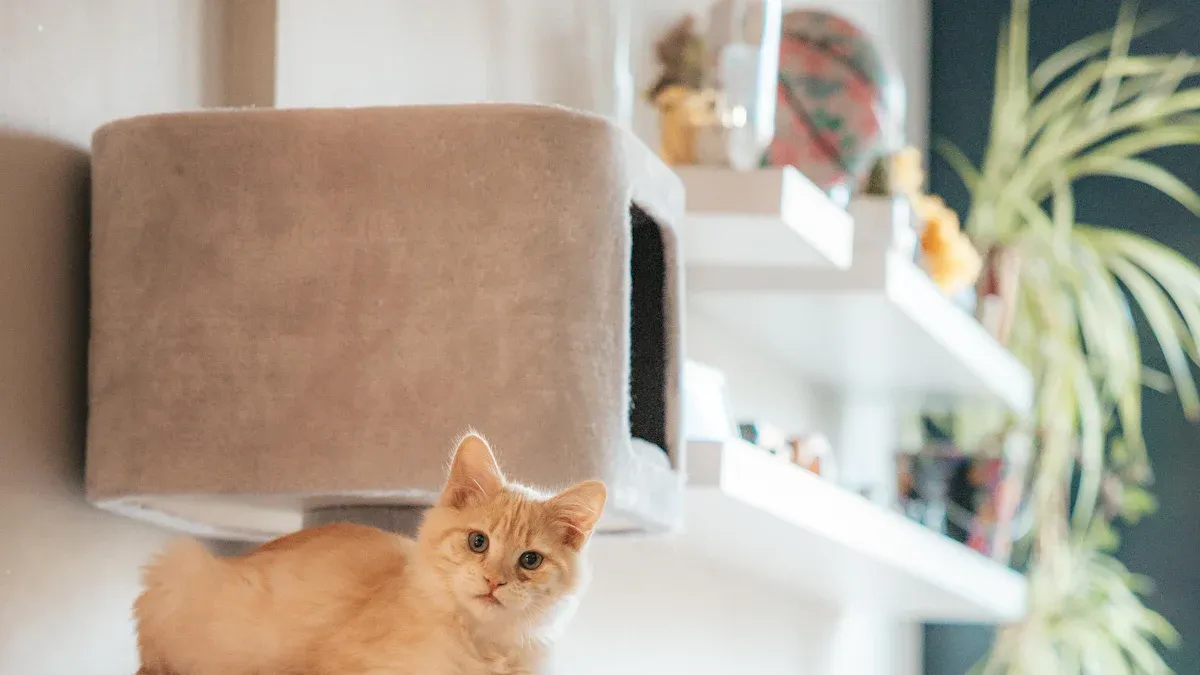
Material selection determines how your product performs in real homes. Cats scratch, climb, jump, and sleep on furniture for years. Cheap materials fail under this constant stress. Premium materials protect your brand and satisfy customers. You must evaluate every component before committing to a production run.
Solid Wood vs. Engineered Wood: Safety and Durability
Solid wood offers superior structural integrity for cat furniture. Natural wood grain resists splitting and holds screws tightly. Pine, rubberwood, and birch provide excellent strength-to-weight ratios. These species handle repeated jumping and scratching without deformation. Solid wood pieces often last five to ten years in active households.
Engineered wood products present different performance characteristics. Particleboard and medium-density fiberboard cost less than solid wood. These materials work for vertical panels and non-structural elements. However, engineered wood struggles with heavy loads and moisture exposure. Joints loosen over time when cats repeatedly land on platforms.
Safety concerns extend beyond structural performance. Engineered wood products such as particleboard, plywood, and medium-density fiberboard frequently release volatile organic compounds (VOCs) into indoor spaces. Artificial adhesives, resins, and surface treatments cause these emissions. Formaldehyde is among the most significant VOCs emitted because of its health hazards and widespread use in wood-based products. The International Agency for Research on Cancer (IARC) classifies formaldehyde as a Group 1 carcinogen.
-
Engineered wood products release VOCs primarily due to artificial adhesives, resins, and surface treatments.
-
Formaldehyde poses significant health hazards and is classified as a Group 1 carcinogen by IARC.
-
VOCs from wood temporarily weaken antioxidant defenses but do not disrupt long-term redox equilibrium under studied exposure conditions.
Regulatory standards address these safety concerns. CARB P2 (California Air Resources Board, Airborne Toxic Control Measure Phase 2) is a formaldehyde emission standard covering composite wood products such as hardwood plywood, particleboard, and medium-density fiberboard. It sets a maximum airborne formaldehyde emission threshold of 0.09 ppm for particleboard, the most common structural material in cat trees. This limit applies to the finished composite panel, not just the raw resin. Manufacturers must use low-emission urea-formaldehyde or alternative resin systems with third-party certification before sale. Cats spend 12–16 hours per day in close contact with cat tree surfaces. They are more sensitive to airborne irritants than humans. Even moderate emission levels represent meaningful repeated exposure.
You should prioritize solid wood for all structural components. Use engineered wood only for non-load-bearing panels with proper CARB P2 certification. This approach balances cost efficiency with safety and durability.
Coverings That Withstand Scratching and Wear
Cats scratch to mark territory, stretch muscles, and maintain claw health. Your covering materials must handle this natural behavior without rapid deterioration. The wrong materials lead to frayed surfaces, exposed staples, and customer complaints.
Sisal rope remains the industry standard for scratching posts. Dense, tightly wound sisal lasts significantly longer than loose alternatives. Look for sisal with consistent thickness and minimal gaps between wraps. Natural, undyed sisal reduces chemical exposure concerns. Some manufacturers use sisal carpet instead of rope. Carpet covers larger surface areas but often wears faster at high-contact points.
Carpet selection requires careful evaluation. Plush carpets feel soft but trap odors and show claw damage quickly. Tight-loop commercial carpets resist scratching better than cut-pile options. Solution-dyed carpets maintain color after repeated cleaning. Avoid carpets treated with stain-resistant chemicals. These treatments may contain perfluoroalkyl substances (PFAS) linked to health concerns.
Faux fur and fleece work well for sleeping areas. These materials provide warmth and comfort without structural demands. However, they require regular cleaning to prevent odor buildup. Removable, machine-washable covers simplify maintenance for end users.
Material thickness affects durability. Thin coverings wear through quickly at scratching posts. Thicker materials absorb claw impact and distribute stress across the surface. You should specify minimum thickness requirements in your OEM cat furniture specifications.
Hardware, Adhesives, and Non-Toxic Standards
Hardware quality determines structural stability and user safety. Cheap screws strip easily during assembly. Weak brackets fail under repeated dynamic loads. You must specify corrosion-resistant hardware for all connection points.
Stainless steel screws and bolts resist rust and maintain holding power. Zinc-plated hardware offers adequate protection at lower cost. Avoid untreated steel hardware in humid environments. Cats may also contact hardware during play. Smooth surfaces and recessed heads prevent injury.
Adhesives require equal attention. Many wood glues contain formaldehyde or other toxic compounds. Water-based adhesives with low VOC content provide safer alternatives. Polyvinyl acetate (PVA) glues offer strong bonds without harmful emissions. You should verify that all adhesives meet ASTM D4236 standards for art materials safety.
Non-toxic standards protect both cats and customers. Look for products certified by independent testing organizations. Greenguard Gold certification verifies low chemical emissions. FSC certification confirms responsible wood sourcing. These certifications provide third-party validation of your material claims.
HOMER demonstrates how premium material selection creates market advantages. Their solid wood construction and strict quality control protocols set the standard for OEM cat furniture manufacturing. You should evaluate suppliers on their material sourcing, adhesive specifications, and certification documentation before placing orders.
A Maintenance Checklist for Custom Cat Furniture
You extend product lifespan when you give customers clear maintenance instructions. A simple checklist inside every package reduces damage complaints and return requests.
Weekly and Monthly Care for Longevity
Weekly tasks keep cat furniture in good condition. You should vacuum all fabric surfaces to remove hair and dander. Check sisal rope for loose strands and tighten any exposed hardware. Wipe solid wood surfaces with a damp cloth to remove dust and debris.
Monthly maintenance prevents bigger problems. Inspect all joints and connection points for wobbling. Tighten screws and bolts that have loosened from daily use. Rotate scratching posts if your design allows this feature. Trim frayed sisal ends to prevent unraveling.
Deep Cleaning and Odor Control Methods
Deep cleaning removes embedded dirt and eliminates odors. You should steam clean fabric covers every three months. Use enzyme-based cleaners for urine stains and organic messes. These products break down proteins that cause persistent smells.
Baking soda absorbs odors between deep cleanings. Sprinkle it on surfaces and let it sit for fifteen minutes. Vacuum thoroughly afterward. For wood components, use a pet-safe wood conditioner twice yearly. This step prevents cracking and maintains finish quality.
When to Repair vs. Replace to Reduce Returns
You must help customers decide between repair and replacement. Minor issues like loose screws or worn sisal wraps require simple repairs. Provide replacement parts for these common problems. This approach saves customers money and reduces your return rate.
Major structural failures need replacement. Cracked platforms or broken support beams compromise safety. You should offer replacement units for these situations. A generous replacement policy builds trust and protects your brand reputation. Quality OEM cat furniture paired with proper maintenance guidance creates lasting customer satisfaction.
Modular Design in Your OEM Cat Furniture Procurement
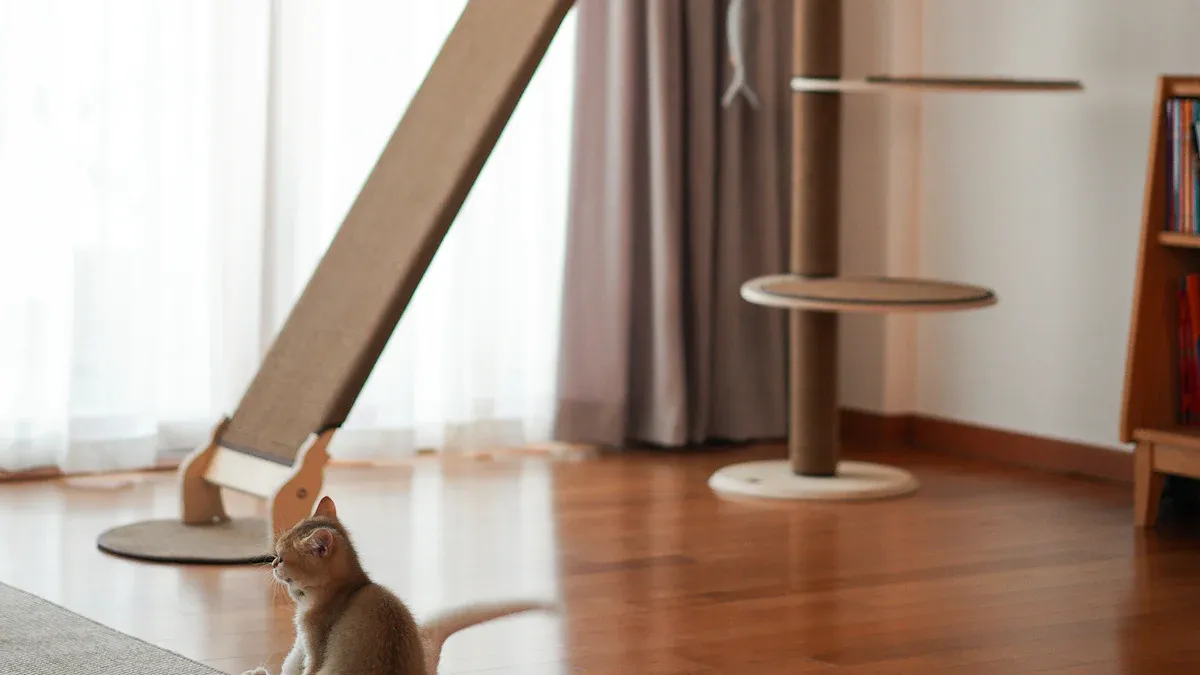
Modular design transforms how you manufacture, sell, and support cat furniture. This approach breaks products into standardized components. You gain flexibility in production and simplify customer service.
Benefits of Interchangeable Components
Interchangeable components reduce manufacturing complexity. You can swap scratching posts, platforms, and bases across multiple product lines. This flexibility lets you create variations without redesigning entire units. Customers benefit from easy repairs. A damaged sisal post becomes a simple replacement instead of a full furniture return. HOMER applies this principle by designing components that fit multiple models. Their modular approach reduces waste and improves customer satisfaction.
Simplifying Replacement Parts and SKU Management
Modular design streamlines your inventory and SKU structure. You stock fewer unique parts and assemble them into different configurations. This strategy lowers warehousing costs and reduces dead stock. Replacement part fulfillment becomes faster and more accurate. When customers need a new platform or post, you ship a single component. This efficiency cuts shipping costs and speeds resolution times. Your customer service team handles fewer complex requests.
Scaling Production with Modular Platforms
Modular platforms accelerate production scaling. You increase output by manufacturing more components, not more complete units. This approach shortens lead times during demand spikes. Production lines adapt quickly to new configurations. You can test market demand for new designs with minimal investment. Successful products scale rapidly using existing component inventory. This manufacturing model supports sustainable growth for your OEM cat furniture business.
Evaluating Suppliers for OEM Cat Furniture Manufacturing
Supplier selection determines your product quality, production timeline, and long-term profitability. You cannot afford to partner with manufacturers who cut corners on materials or testing. A systematic evaluation process protects your brand from costly mistakes. You must assess certifications, sampling procedures, and communication practices before committing to any production run.
Certifications, Compliance, and Third-Party Testing
Certifications provide independent verification of supplier claims. You should request documentation for every certification a supplier mentions. Legitimate manufacturers maintain current certificates from recognized testing organizations. These documents prove compliance with safety and quality standards.
Key certifications for cat furniture manufacturing include CARB P2 for formaldehyde emissions, FSC for responsible wood sourcing, and Greenguard Gold for low chemical emissions. You should verify each certificate directly with the issuing organization. Some suppliers falsify documents or present expired certifications. Direct verification eliminates this risk.
Third-party testing validates product safety and performance. You should require suppliers to submit samples to independent laboratories. These labs test for structural integrity, chemical emissions, and material durability. Results provide objective data for your supplier comparison.
The American National Standards Institute (ANSI) and ASTM International publish testing standards relevant to pet furniture. ASTM F2057 covers clothing storage unit stability. Similar principles apply to cat furniture stability testing. You should ask suppliers about their testing protocols and request copies of recent test reports.
Acceptable Quality Limit (AQL) standards govern third-party inspections. For most pet furniture B2B orders, the recommended AQL levels are AQL 2.5 for major defects and AQL 4.0 for minor defects. These levels determine the sample size and accept/reject numbers based on the batch quantity.
|
Defect Type |
Commonly Used AQL Range |
|---|---|
|
Critical defects (safety hazards) |
0.0–0.65% |
|
Major defects (functional issues) |
1.0–2.5% |
|
Minor defects (cosmetic imperfections) |
2.5–4.0% |
An AQL of 2.5 is the industry default for general consumer products. A common default AQL plan for third-party inspections is 0 critical, 2.5 major, and 4.0 minor defects, applied at General Inspection Level II under ISO 2859-1 / ANSI/ASQ Z1.4. Under normal inspection, AQL levels range from 0.065 to 6.5. For general consumer products, a common AQL setting is 2.5 for major defects and 4.0 for minor defects, with zero tolerance for critical defects.
You should specify these AQL standards in your supplier contracts. Clear quality benchmarks prevent disputes during production. Suppliers understand your expectations and inspect their own output before shipment. This proactive approach reduces defective units reaching your warehouse.
HOMER maintains comprehensive certification documentation and submits products for regular third-party testing. Their commitment to compliance sets a benchmark for OEM cat furniture manufacturing. You should expect similar transparency from every supplier you evaluate.
Sampling, Pilot Orders, and Quality Control Protocols
Sampling reveals how a supplier performs before you commit to full production. You should request physical samples of every component and material. Evaluate construction quality, material feel, and finish consistency. Compare samples against your specifications and competitor products.
Sample evaluation requires systematic documentation. Create a scoring rubric covering structural integrity, material quality, assembly precision, and surface finish. Photograph each sample from multiple angles. Record measurements and weight for future reference. This documentation protects you during production disputes.
Pilot orders test supplier capabilities at scale. You should place a small order before committing to full production volumes. A pilot order of 50 to 100 units reveals production consistency and quality control effectiveness. Inspect every unit in the pilot batch. Document defect rates and categorize issues by type.
Quality control protocols must exist at multiple production stages. Incoming material inspection catches problems before manufacturing begins. In-process checks identify issues during assembly. Final inspection before shipment prevents defective units from leaving the factory. You should require suppliers to document each inspection stage.
Statistical process control (SPC) provides objective quality data. Suppliers using SPC track defect rates over time and identify trends. You should ask potential partners about their SPC practices. Manufacturers without measurement systems cannot improve quality consistently.
Corrective action processes handle defects when they occur. You should evaluate how suppliers respond to quality issues. Do they investigate root causes? Do they implement permanent fixes? Do they communicate transparently about problems? Strong corrective action systems prevent recurring defects.
HOMER implements rigorous quality control at every production stage. Their pilot order process allows brands to verify quality before scaling. This systematic approach reduces risk for pet brands entering new product categories.
Communication, Lead Times, and MOQ Negotiation
Communication quality predicts supplier reliability. You should evaluate responsiveness during the initial inquiry phase. How quickly do suppliers respond to questions? Do they provide detailed answers or vague promises? Do they proactively share information about potential issues?
Language barriers create communication challenges. You should confirm that suppliers have English-speaking staff for order management. Misunderstandings about specifications lead to production errors. Clear communication channels prevent costly mistakes.
Lead times vary significantly between suppliers. You should request production timelines for each product type. Standard lead times for cat furniture range from 30 to 60 days after deposit. Complex designs with custom components may require longer timelines. You must account for shipping time separately.
Seasonal demand affects lead times. Chinese New Year causes production shutdowns for two to four weeks. You should plan orders around major holidays. Buffer inventory protects against supply disruptions. Suppliers with multiple production facilities offer more flexibility during peak periods.
Minimum order quantities (MOQs) determine your initial investment. New suppliers often require higher MOQs to justify setup costs. You should negotiate MOQs based on your sales projections and inventory capacity. Some suppliers accept lower MOQs for first orders to establish relationships.
MOQ negotiation requires understanding supplier economics. Setup costs, material minimums, and production efficiency drive MOQ requirements. You can propose tiered pricing structures that reward larger orders. This approach gives you flexibility while meeting supplier needs.
Payment terms affect cash flow and risk. Standard terms include 30% deposit with 70% balance before shipment. You should negotiate terms that protect your investment. Letters of credit provide security for large orders. Escrow services offer protection for first-time supplier relationships.
Supplier relationships require ongoing management. You should schedule regular check-ins during production. Request progress photos and inspection reports. Address issues immediately rather than waiting for shipment. Proactive communication prevents small problems from becoming major disruptions.
Choose solid wood and dense sisal to match real cat behavior and reduce damage claims. Vet suppliers on testing, compliance, and communication consistency, not just price. Adopt modular designs to simplify SKUs, speed reorders, and lower inventory risk. Deliver a maintenance guide with every unit to extend product life and cut return rates. Start with a pilot order from a partner like HOMER — whose solid wood construction and strict QC set the standard for OEM cat furniture — before scaling full production.
FAQ
What certifications should you require from OEM cat furniture suppliers?
You should require CARB P2, FSC, and Greenguard Gold certifications. These documents verify formaldehyde limits, responsible sourcing, and low chemical emissions. Always confirm certificates directly with issuing organizations.
How do you test cat furniture durability before full production?
You place a pilot order of 50 to 100 units. Inspect every unit for structural integrity and material wear. Document defect rates using AQL 2.5 for major issues.
Why does modular design reduce OEM cat furniture costs?
Modular components lower SKU counts and simplify inventory management. You stock fewer unique parts and assemble multiple configurations. This approach cuts warehousing costs and speeds replacement fulfillment.