86-13400725797
 info@homertrimmings.com




Choosing the right packaging is an important decision for clothing brands. Packaging does more than protect garments during storage and transportation. It also influences how customers perceive a brand, how products are presented at retail stores, and how efficiently packaging can be handled throughout the supply chain. When comparing rigid boxes vs folding cartons for clothing packaging, brands need to consider appearance, durability, storage space, shipping costs, and the overall customer experience.
So, which packaging option is better for clothing? Rigid boxes are generally a better choice for premium apparel, luxury fashion items, and gift packaging, while folding cartons are often more practical for everyday clothing, large-volume orders, and cost-conscious packaging projects. The right solution depends on the type of garment, target market, brand positioning, and distribution requirements.
At Homer's custom paper box collection, brands can explore different paper packaging options, including magnetic closure boxes, gift boxes, and other customized packaging styles for apparel and related products.
What Is the Difference Between Rigid Boxes and Folding Cartons?
Rigid boxes and folding cartons are both paper-based packaging solutions, but they differ in construction, appearance, and typical applications. Understanding these differences helps clothing brands select packaging that matches their product requirements.
Rigid boxes are typically made from thick paperboard wrapped with printed or decorative paper. Their sturdy construction allows them to maintain their shape, even when empty. They are commonly associated with premium packaging because of their solid structure, refined appearance, and presentation value. Magnetic closure boxes, drawer boxes, and lift-off lid boxes are common examples of rigid-style packaging.
Folding cartons are generally produced from thinner paperboard and supplied flat before assembly. They are folded along pre-scored lines to create the final box shape. This construction makes them easier to store and transport before use, making them a practical option for brands that need packaging in larger quantities.
In simple terms, rigid boxes prioritize structure and presentation, while folding cartons prioritize efficient packaging, storage, and distribution.
Rigid Boxes for Clothing Packaging: Benefits and Limitations
Rigid boxes are particularly suitable for clothing brands that want their packaging to communicate quality and exclusivity. Their firm construction creates a more substantial unboxing experience, which can make a difference when presenting premium garments, limited collections, or special gifts.
For example, Homer's Custom Luxury White Magnet Flap Clothing Paper Box is designed for clothing and shoe packaging. This product features a magnetic flap closure and ribbon details, offering a packaging style suitable for fashion brands seeking a more distinctive presentation.
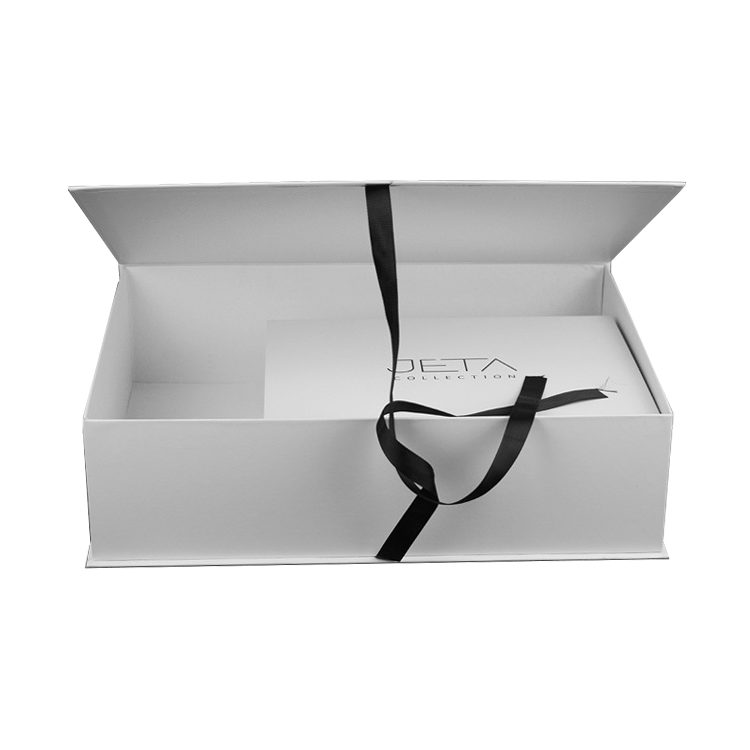
The product specifications include kraft paper, coated paper, art paper, and other materials according to customer requirements. Available customization options include CMYK and Pantone colors, different shapes and dimensions, embossing, glossy lamination, matte lamination, and stamping.
These options allow clothing brands to create packaging that reflects their visual identity and complements the style of their garments.
Key advantages of rigid boxes include:
- Premium presentation: The solid structure creates a more substantial appearance, making rigid boxes suitable for luxury apparel and gift sets.
- Better shape retention: Their sturdy construction helps maintain the packaging shape during handling and storage.
- Brand customization: Printing, surface finishes, ribbons, and magnetic closures can create a distinctive brand presentation.
- Reusable packaging: Customers may keep well-designed rigid boxes for storing accessories, clothing, or personal items.
However, rigid boxes also have limitations. They generally require more storage space than flat-packed cartons and can involve higher material, manufacturing, and transportation costs. Their suitability depends on the packaging budget, order quantity, and intended distribution method.
Folding Cartons for Clothing Packaging: Benefits and Limitations
Folding cartons are a practical packaging choice for apparel brands that need functional packaging without adding unnecessary bulk. Because they can be supplied flat and assembled when needed, they help businesses make better use of warehouse space and simplify packaging operations.
For everyday apparel products such as T-shirts, shirts, lightweight garments, and basic fashion collections, folding cartons can provide sufficient packaging structure when the correct paperboard and box design are selected.
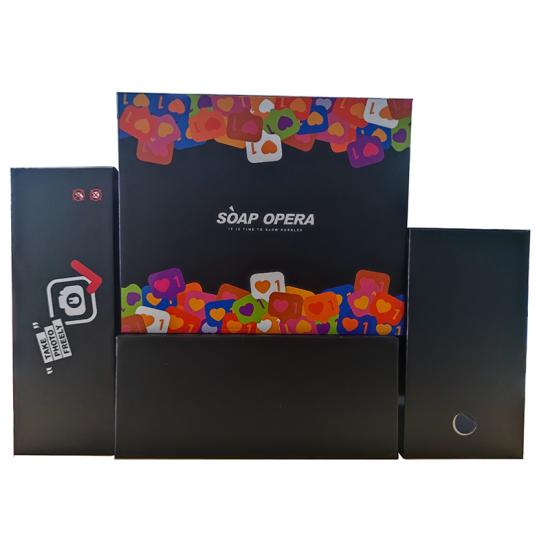
Homer's Heaven and Earth Cover Carton Universal Packaging Gift Box is another example from its existing paper box range. The product is mainly used for shoebox packaging, themed product packaging, gift packaging, and storage. Its coated paper material, customizable dimensions, and printing options provide a reference for brands exploring paperboard packaging solutions.
Key advantages of folding cartons include:
- Space-saving storage: Flat-packed cartons require less storage space before assembly.
- Efficient handling: Their folding structure can support streamlined packing operations.
- Flexible printing: Brands can customize colors, logos, graphics, and other visual elements.
- Practical for larger orders: Folding cartons are worth considering when packaging needs to be purchased and used in higher volumes.
- Material flexibility: Different paperboard grades can be selected according to garment weight and protection requirements.
One limitation is that folding cartons generally provide less structural rigidity than traditional rigid boxes. They may also require additional internal protection when packaging delicate garments or products that need stronger shape retention.
Rigid Box vs Folding Carton: A Direct Comparison
For clothing manufacturers, fashion retailers, and apparel brands, comparing the two packaging styles side by side makes the selection process easier. The following table summarizes their main differences.
| Comparison Factor | Rigid Box | Folding Carton |
|---|---|---|
| Structure | Thick, sturdy paperboard construction | Foldable paperboard construction |
| Appearance | Premium and substantial | Simple, versatile, and customizable |
| Protection | Generally better shape retention | Depends on paperboard grade and construction |
| Storage | Usually requires more space | Can be stored flat before assembly |
| Shipping | May involve higher shipping volume | Can reduce packaging volume before assembly |
| Cost | Generally higher | Often more economical |
| Best Applications | Luxury clothing, premium gifts, special collections | Everyday apparel, retail packaging, larger-volume orders |
It is important to remember that actual packaging performance depends on the material thickness, box construction, dimensions, and manufacturing quality. A well-designed folding carton can offer suitable protection for many garments, while a rigid box may not be necessary for every clothing product.
Which Packaging Is Better for Different Clothing Products?
The best packaging solution depends on what a brand sells and how customers receive the products. Rather than choosing packaging based only on appearance, businesses should consider the product's value, weight, distribution channel, and presentation requirements.
Luxury clothing and premium fashion collections
Rigid boxes are generally the stronger choice for luxury clothing, designer apparel, premium gift sets, and limited-edition collections. Magnetic closures, ribbon details, and customized finishes can help create a more memorable unboxing experience. A magnetic flap clothing box, such as Homer's existing white clothing paper box, is one example of this packaging approach.
Everyday apparel and basic clothing
Folding cartons are often more practical for standard shirts, T-shirts, sweaters, and other everyday clothing products. They offer a balance between product presentation and packaging efficiency, especially when businesses need consistent packaging across multiple product lines.
Clothing gifts and promotional packages
Both options can work well for gift packaging. Rigid boxes are suitable for premium gift presentation, while folding cartons can be customized with brand graphics and seasonal designs. The decision should depend on the desired presentation and packaging budget.
Footwear and clothing accessories
Paperboard boxes are also widely used for footwear and fashion accessories. Homer's custom paper packaging boxes include examples such as heaven-and-earth cover boxes and magnetic flap boxes, which demonstrate different approaches to product presentation and storage.
What Should Clothing Brands Consider Before Choosing a Packaging Box?
Before placing a custom packaging order, clothing brands should evaluate several practical factors. These considerations help avoid unnecessary packaging expenses and ensure the final design works for both the product and the supply chain.
Product dimensions and weight: The box should fit the folded garment properly without excessive empty space. Consider the garment's thickness, folding method, and whether additional inserts are required.
Brand positioning: Premium fashion brands may benefit from the presentation of rigid boxes, while everyday apparel brands may prioritize functional and economical folding cartons.
Storage and transportation: Businesses shipping large quantities should consider the storage volume of empty boxes, carton dimensions, and the cost of transporting assembled packaging.
Printing and finishing: Choose suitable printing colors, logo placement, surface treatments, and closure styles. These details help maintain consistent visual branding across packaging and other garment accessories.
Order quantity and budget: Compare the complete cost rather than looking only at the unit price. Material selection, box construction, customization, assembly, storage, and shipping can all affect the total packaging cost.
Protection requirements: Consider whether the clothing needs protection against dust, moisture, compression, or handling during transportation. Packaging should be selected according to actual distribution conditions rather than appearance alone.
How Custom Packaging Supports Clothing Brand Identity
Packaging is an important part of a clothing brand's overall visual identity. Customers often encounter the packaging before they see the garment itself, especially in gift purchases, online orders, and premium retail environments.
Consistent colors, logo placement, printed graphics, and finishing details can make packaging more recognizable. A carefully designed box can also complement other garment accessories, creating a more unified brand presentation.
For example, clothing brands can coordinate their packaging with custom garment labels and patches or custom hang tags and stickers to maintain consistent branding across different customer touchpoints.
As a garment accessories supplier, Xiamen Homer Trimmings Co., Ltd. offers product development, design, production, and technical support for different printing and garment accessory requirements. Its paper packaging range provides clothing brands with options to explore customized packaging designs according to their product and branding needs.
Rigid Box or Folding Carton: Which One Should You Choose?
There is no single packaging solution that works best for every clothing brand. The right choice depends on the balance between product protection, presentation, storage efficiency, and overall cost.
If your priority is premium presentation, a more substantial structure, and an enhanced gifting experience, a rigid box is generally the better option. If your priority is efficient storage, practical handling, and economical packaging for everyday apparel, a folding carton is often the more suitable choice.
For clothing brands that are still comparing options, reviewing actual box samples and discussing material, dimensions, printing, and finishing requirements with a packaging supplier can help make the decision easier.
Homer provides customized paper box solutions for different packaging applications. Explore the Paper Box product range or contact Homer to discuss your clothing packaging requirements.
Frequently Asked Questions About Rigid Boxes and Folding Cartons
Are rigid boxes better than folding cartons for clothing packaging?
Rigid boxes are generally better for luxury clothing, premium gift packaging, and brands that prioritize presentation. Folding cartons are often better for everyday apparel and larger-volume packaging because they can be stored flat and are generally more economical.
Are folding cartons strong enough for clothing packaging?
Yes. Folding cartons can provide suitable protection for many types of clothing when the correct paperboard thickness, dimensions, and construction are selected. They are commonly considered for shirts, T-shirts, sweaters, and other folded garments.
Which packaging option is more cost-effective?
Folding cartons are generally more cost-effective because they use a simpler construction and can be shipped and stored flat. However, the actual cost depends on material specifications, printing, finishing, order quantity, and transportation.
Can rigid boxes and folding cartons both be customized?
Yes. Both packaging types can be customized with brand logos, colors, dimensions, and printing designs. Depending on the construction and material, additional options may include embossing, lamination, stamping, and other decorative finishes.
What is the best packaging for luxury clothing gifts?
Rigid boxes are usually a preferred option for luxury clothing gifts because of their sturdy structure and premium presentation. Magnetic closures, ribbons, and customized surface finishes can further enhance the unboxing experience.
Does Homer offer custom clothing packaging boxes?
Yes. Homer lists clothing and shoe packaging options in its paper box collection, including a Custom Luxury White Magnet Flap Clothing Paper Box. The product supports customization of materials, dimensions, colors, and printing finishes according to customer requirements.